• Dana Arts
  • Collections
    • Animal Inspired
    • Beaded Jewelry
    • Bracelets
    • Celtic Inspired
    • Charms
    • Chokers
    • CTR Rings
    • Earrings
    • Engagement Rings
    • Faces
    • Flag Rings
    • Gold Bands
    • Greek Inspired
    • Hawaiian Inspired
    • Impressions of Nature
    • Laotion Inspired
    • Mission Rings
    • Vials
    • Pendants/Necklaces
    • Paradise
    • Patterned Bands
    • Steampunk Inspired
    • Custom
  • Photography
  • Crafts
  • Still
  • CAD
  • Details
    • Policies
    • FAQ
  • About
    • About Me
    • Contact
  • Blog
  • Pricing
  • Scheduling
  • Account/Login
Dana Arts

The Art of Handcrafted Art

  • Dana Arts
  • Collections
    • Animal Inspired
    • Beaded Jewelry
    • Bracelets
    • Celtic Inspired
    • Charms
    • Chokers
    • CTR Rings
    • Earrings
    • Engagement Rings
    • Faces
    • Flag Rings
    • Gold Bands
    • Greek Inspired
    • Hawaiian Inspired
    • Impressions of Nature
    • Laotion Inspired
    • Mission Rings
    • Vials
    • Pendants/Necklaces
    • Paradise
    • Patterned Bands
    • Steampunk Inspired
    • Custom
  • Photography
  • Crafts
  • Still
  • CAD
  • Details
    • Policies
    • FAQ
  • About
    • About Me
    • Contact
  • Blog
  • Pricing
  • Scheduling
  • Account/Login

925 sterling silver vs Argentium® 940 PRO Silver

I’ve been casting sterling silver for so many years now I can’t even remember when I started. Yes I’m getting older). Well I had a customer ask if I could cast in Argentium® 940 PRO Silver. I said I would look into it. So I did. So let me explain the differences

925 sterling silver is the common silver you and I know that has been around for a very long time. It’s 925 parts silver mixed with 75 parts cooper. That’s at least the most basic alloy used and what makes up sterling silver out of 1000 parts.

So Argentium® 940 PRO Silver is 940 parts silver (94%) 50 parts cooper (5%) and 10 parts germanium (1%). That higher silver content and the added germanium really makes a big difference in keeping the silver tarnish resistant.

Now getting back to the customer that asked if I could cast one of my rings in Argentium® 940 PRO Silver. I do loose out by jumping into a new area such as this. I have to buy much more silver than just the ring because casting silver requires a large button and silver sprues that go to the ring. I’ve never done it with this type of silver so there is the “I’m a bit afraid” factor. I do like to learn new things so I thought I should try it. I invested into it knowing that I may or may not ever do it again.

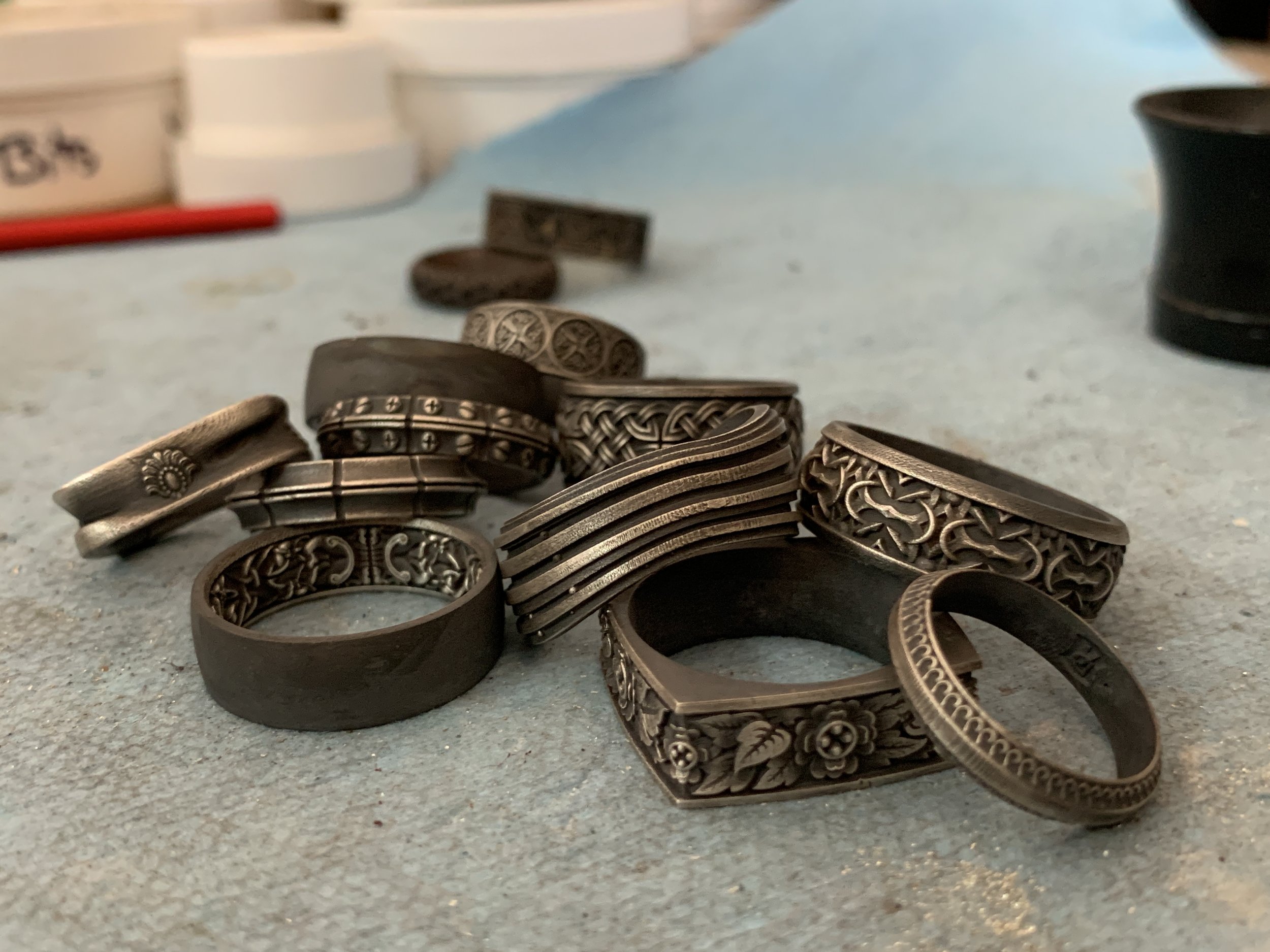
So my first impressions on casting with it. It took longer to heat up than 925 silver so a little more time is involved and gas from the torch. The surface was so clean when all the way melted. It seamed a little more sluggish than sterling. When I would pull the torch away for just a second to see the surface it was different than with 925. With 925 the oxidation comes and the surface skin comes quickly and that’s why the boric acid helps keep the surface clean. With Argentium® 940 PRO Silver the surface never would get that oxidized surface. It just stayed shinny and bright with no skin. The hard part about casting it is that I usually have visual markers for sterling silver for when it’s hot enough. With 940 silver all those visual clues were not there. I didn’t want to under heat it or overheat it. All I could do was my best and that was to just use my best judgement. So that is what I did and it worked. Yes, I was so excited. Usually with sterling silver the casted pieces are oxidized black. With the 940 silver there was no oxidation and it was all looking like silver. I was impressed. This image shows what it looks like right after casting and the investment is cleaned off it.

Argentium 940 silver casting

Argentium® 940 PRO Silver casting

Cleaning up the silver was also a new experience. I noticed it was a bit brighter and it was just a neat experience. When it came time for the oxidation I was not sure how difficult it would be. I thought it might be really hard to do. I used Winox and had to heat up the silver to make it work. The heat did the trick and I got it oxidized very well. In the end it turned out very nice and I could be more happy with it.

Casting with 940 silver is much more expensive. It takes longer to heat up, more gas is used and so the whole process gets a little more involved. I took this experience as paid schooling so that I could become a better all around jeweler with more knowledge and experience. I’m not sure I’m ready to add this alloy to my line of jewelry just yet, but I would consider it. If you have any thoughts or would love to see it more often in my work then leave a comment below and let me know. I hope this was helpful to anyone looking into using different silver alloys. It was a fun experience and I did enjoy it.
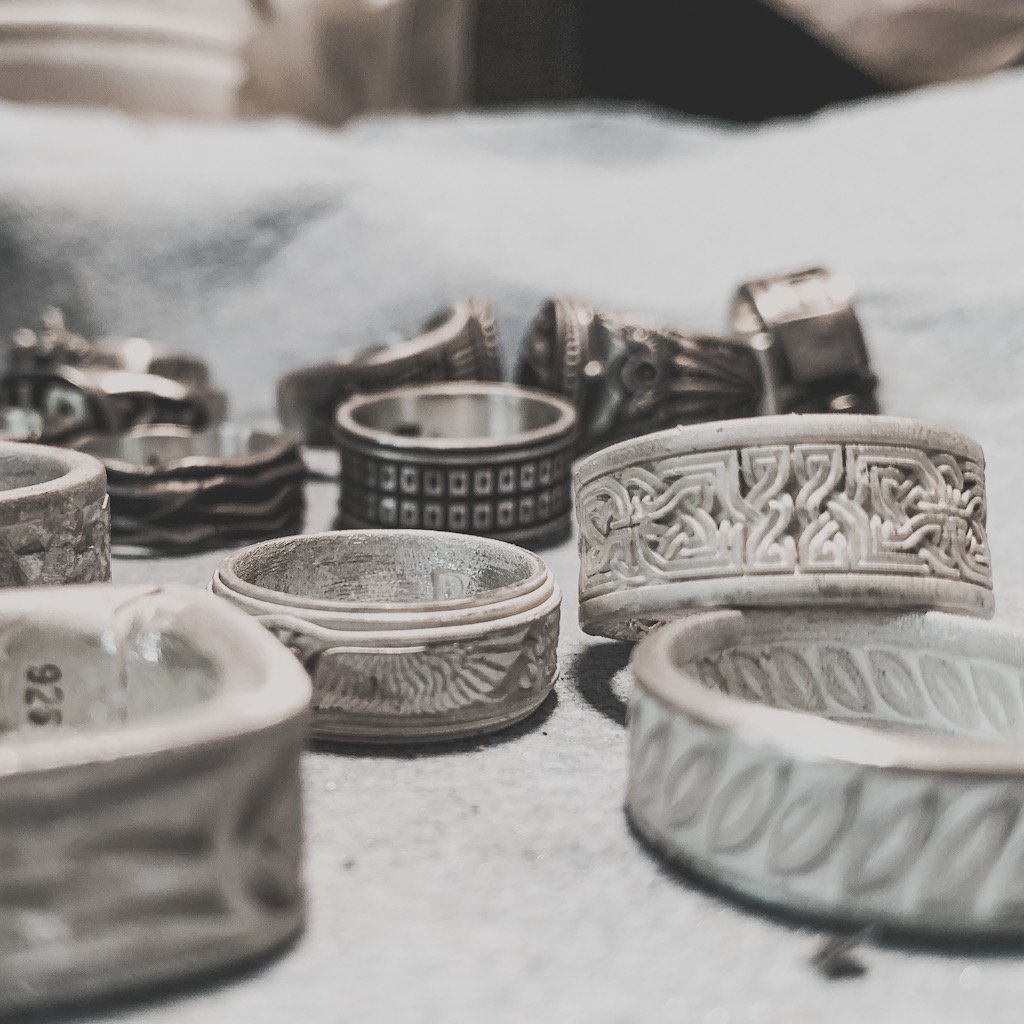
940 Agentium silver vs 925 silver
Justin Thorup
Download
tags: silver casting, silver castings, Silversmith, Argentium 940 pro silver, pros and cons, danaarts
categories: Updates, All Jewelry Related
Friday 09.11.26
Posted by Dana Thorup
 

Lost Wax Casting

What is lost wax casting? I’m glad you asked because I’d love to explain what this is. It’s a process in which you take a wax, invest it and then cast metal into where the wax was. This is the most simple explanation. I’ll go into more depth in just a minute.

rings.jpg
2020-08-28 09.21.13.jpg
2020-08-28 11.10.46.jpg

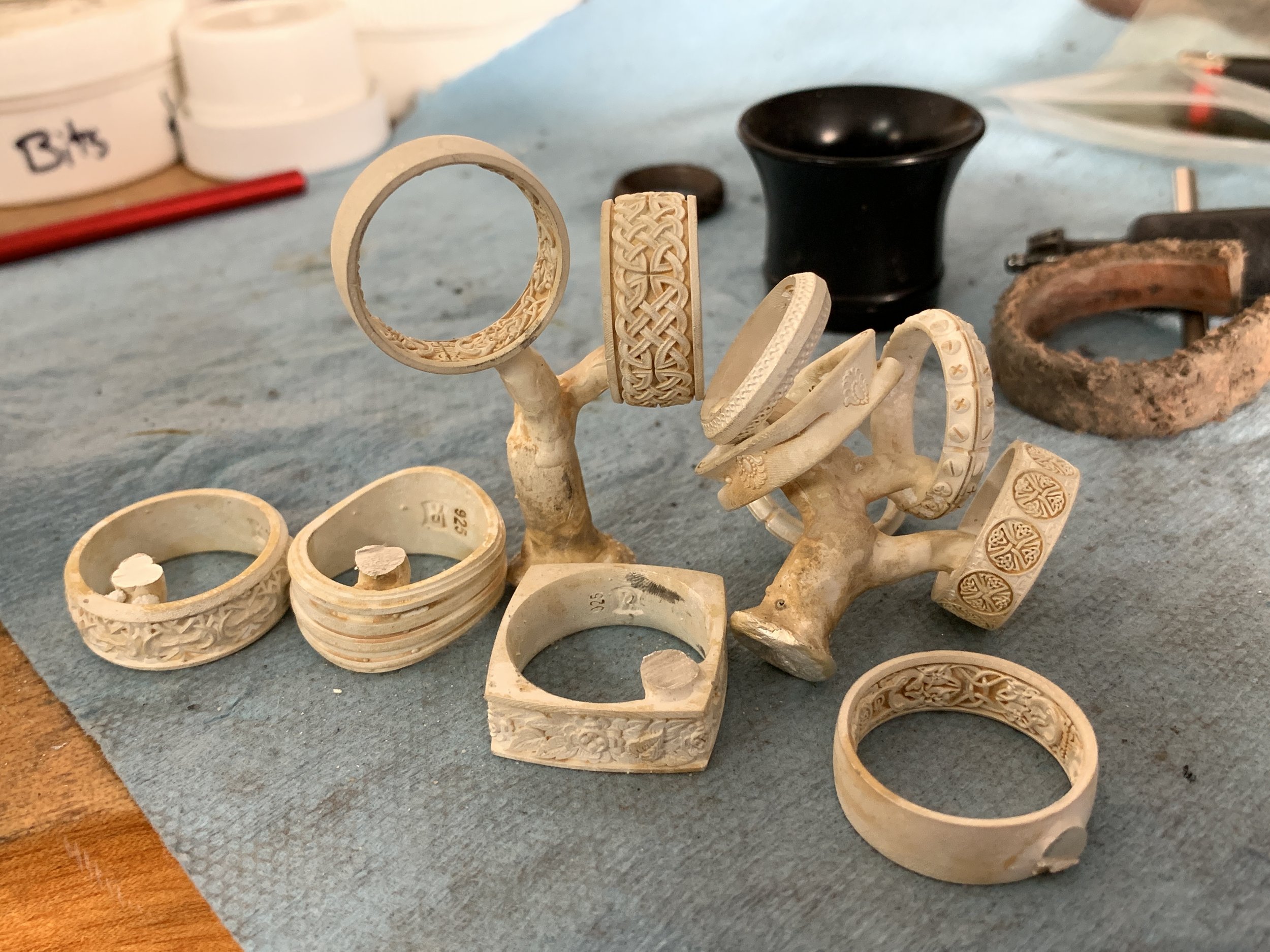
So I’ve been casting my own silver for a long time now. I enjoy it very much. I feel it helps me fell more complete as an artist. This is because I am able to do the whole process myself. I design something in my head or on paper and then can build it in CAD without having to rely on someone else’s ideas or influence the design. I also don’t have to micromanage a designer to pull out what’s in my head. I can then get a precision wax made of what I built in CAD. From there the wax is sprued up into a wax tree. This tree can then be weighed and covered in a metal flask. The investment is then mixed and poured into the flask. Once dried the rubber bottom is then removed and you’ll see the wax sitting there. You put that part face down inside the kiln. During this process the wax melts out and leaved the impression of the art piece. Once it finishes an 8 hour cycle and brought down to the proper temperature, the flask is removed and placed on the vacuum cast machine. There are other types of casting machines, but vacuum casting is the method I use. I then take silver and heat it up to the proper temperature and then pour it into the flask where the wax once was. The silver solidifies and cools off. I can then quench it in a bucket of water and remove the silver casting. If everything worked as it should, the jewelry item is with all the details the wax had. Then the sprues (which are the wax rods that connect the opening where the silver is poured in to the jewelry item) are cut off and the jewelry item can be cleaned up and finished. It’s a lengthy process that is very rewarding as an artist. I do not cast gold even though I could and have before. This is because it’s a bit costly for me right now. Maybe in the future I can. Anyway, that is the process of the lost wax casting. I hope you enjoy the process.

Lost Wax Casting
Justin Thorup
Download
tags: lost wax casting, silver casting, wax, sprue, wax tree, silver castings, how to cast silver, danaarts
categories: All Jewelry Related, New design, Updates
Monday 06.26.23
Posted by Dana Thorup
 

Dana Arts 2025